
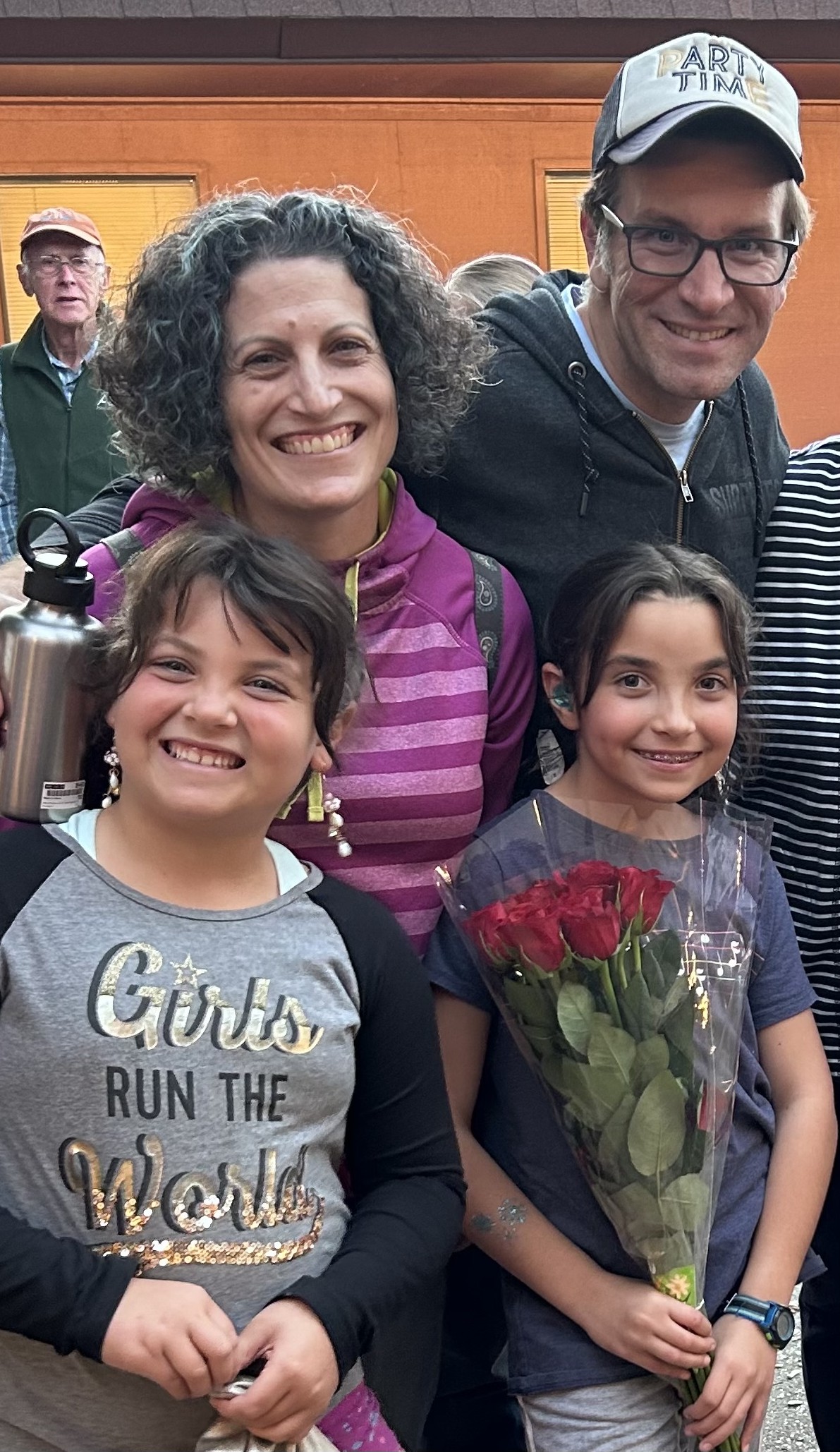
By Marissa Weiss
During a conversation with our daughter’s Teacher of the Deaf when she was in second grade (she’s currently in fifth grade), this invaluable professional accurately summarized the challenges of Rosie’s journey as a hard of hearing kiddo. She noted that Rosie “just doesn’t fit anywhere”. This theme has repeated itself time and again; here are a few examples:
- As a baby with moderate to severe hearing loss in her left ear (fitted with a hearing aid at 3 months) and “typical” hearing in her right ear, we were not offered Family Sign as part of our Early Intervention services as she wasn’t “deaf enough” for ASL. We were able to successfully advocate for the addition of Family Sign.
- When transitioning from Early Intervention to preschool and an IEP, Rosie was classified as Speech/Language instead of Deaf/Hard of Hearing, again due to not being “deaf enough”. We hired an advocate and were able to change the designation to Deaf/Hard of Hearing and add a Teacher of the Deaf to her IEP.
- When her hearing loss progressed at age 5 to profound in her left ear and moderate to severe in her right ear due to enlarged vestibular aqueduct (EVA), she was fitted for a right hearing aid and eventually implanted in her left ear at age 6. Noting that she was doing well academically but seemed to struggle in reading social cues and connecting with peers, we started exploring options other than a mainstreamed school experience. We toured multiple, wonderful Schools of the Deaf, but our daughter strongly identified as Hard of Hearing and wasn’t sure if a School of the Deaf was right for her.
The same Teacher of the Deaf suggested that we add an ASL interpreter to Rosie’s IEP for fourth grade. Even though she wasn’t fluent in ASL, the interpreter would help her fluency and ensure that she didn’t miss anything. I can’t say enough about the importance of a quality, intentional Teacher of the Deaf. I doubt the school district would have approved our request for an interpreter without significant advocacy, but they went along with the Teacher of the Deaf’s recommendation.
We had high hopes for fourth grade, believing that with the interpreter Rosie would really thrive. While the interpreter was lovely and definitely helped Rosie, this addition couldn’t overcome the lack of a Deaf and Hard of Hearing-friendly culture at the school. After an incident in which Rosie was sternly reprimanded for a playground issue that was mainly due to missing a social cue, her new Teacher of the Deaf called an IEP meeting and strongly recommended that Rosie move to the county’s Deaf and Hard of Hearing program. The Teacher of the Deaf was amazing, and shared with us that she felt that Rosie’s needs would probably never adequately be served at a school that didn’t understand the needs of Deaf and Hard of Hearing students. While Rosie was a strong student academically, she would likely continue to face barriers.
Moving to the county program was a tough decision – the program is housed in a neighboring town so she would need to take a bus, and would no longer be at the same school as her younger sister. Many friends didn’t really understand why we would move Rosie; they noted that she always seemed happy and did well in school. While that was true – Rosie is a generally easy-going, happy girl – we ultimately decided to move her the following school year to give her the chance to thrive.
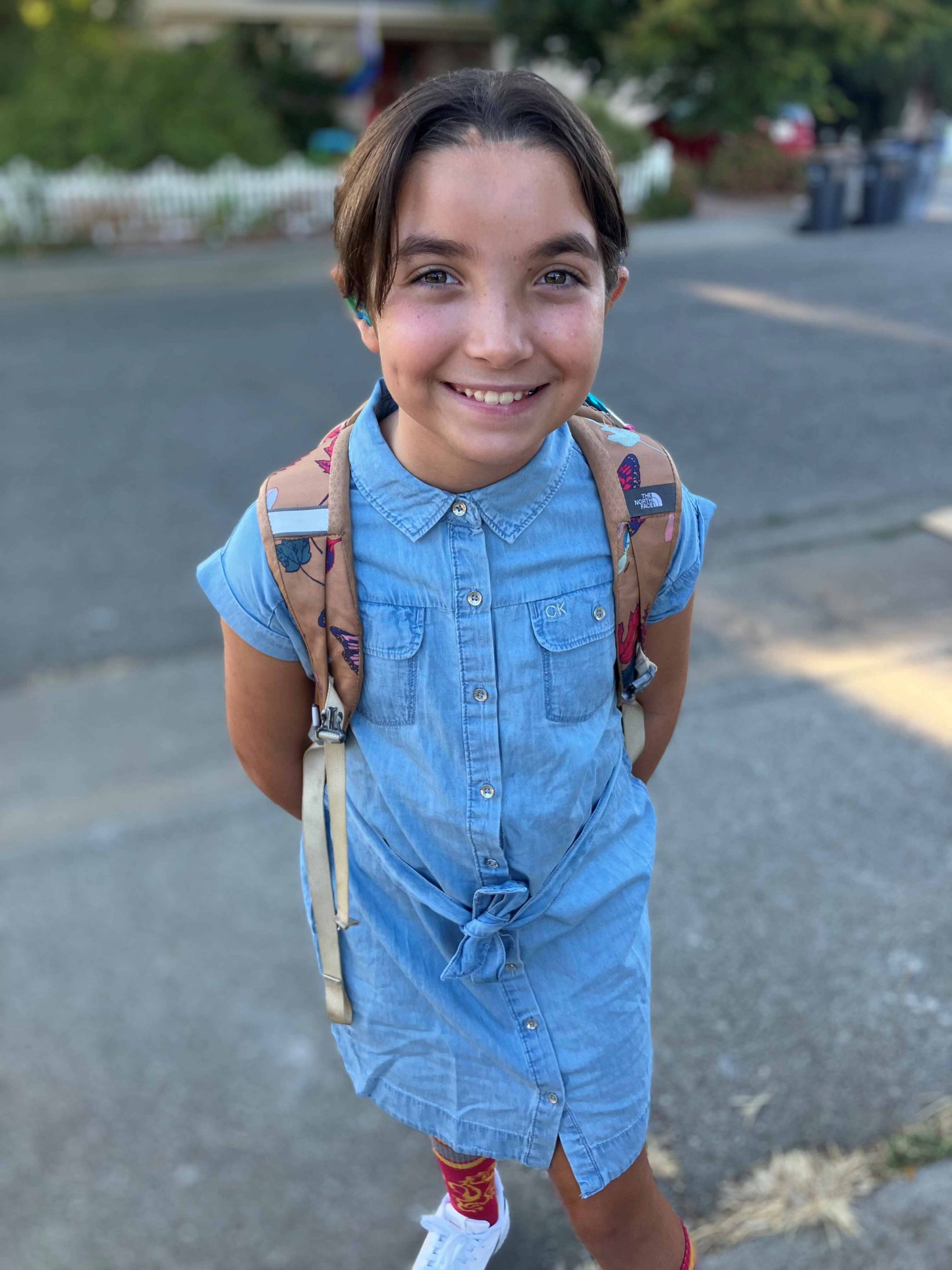
And thrive she has! I can’t say enough wonderful things about the Yolo County Deaf and Hard of Hearing Program in Woodland, California! It truly is the best of both worlds. There is a critical mass of Deaf and Hard of Hearing students in each grade, interpreters in each classroom, educators who are used to working with Deaf and Hard of Hearing students, and the smoothest IEP meetings I have ever had. The Teacher of the Deaf even came to Rosie’s parent-teacher conference, which had never happened before. The only downside is that we don’t know families in Woodland so it’s harder to arrange playdates, but hopefully that will change with time. We’re proud to report that she is one of the top students in her class and has joined student council.
Rosie will still have many experiences in which she doesn’t fit, but the Yolo County Deaf and Hard of Hearing Program is a place that gets as close as we can to an appreciation of Rosie as a Hard of Hearing/predominantly oral/ASL-learning kiddo. Our main sadness is that the program only goes until sixth grade. I’ve tried researching middle school Deaf and Hard of Hearing programs in any state – we’d move to attend a great program – but it’s hard to find a list. I’d be happy to partner with Hands & Voices to create a list – and would love any recommendations from readers for programs to consider!
